Ingredients
Method
- Roast the bones: Preheat your oven to 200°C (400°F). Spread the beef bones in a single layer on a baking tray and roast for 30–35 minutes. You'll know they're ready when they turn a deep, rich brown and smell intensely beefy – the kitchen should smell like a Sunday roast.
- Add the vegetables: Tumble the chopped carrots, celery, onion, and garlic around the bones on the tray. Roast for another 15 minutes until the vegetables soften and the onion edges char slightly, releasing a sweet, caramelised aroma.
- Deglaze the tray: Transfer the roasted bones and vegetables to a large stockpot. Pour a splash of water onto the hot baking tray and scrape up all the browned bits – that's pure flavour. Tip this liquid into the pot.
- Combine everything: Add the apple cider vinegar, bay leaves, peppercorns, salt, and optional herbs to the pot. Pour in the cold water until the bones are just covered – about 3 litres. The water should look cloudy at first, but that will settle.
- Simmer, don't boil: Bring the pot to a gentle boil over medium-high heat, then immediately reduce the heat to low. You want the surface to show just an occasional, lazy bubble – a vigorous boil will make the broth cloudy and greasy. Let it simmer for 12–24 hours. The longer you go, the more gelatin is released; the liquid will turn a deep amber and feel slightly tacky between your fingers when cool.
- Skim the surface: Every few hours, use a ladle to skim off any foam or impurities that rise to the top. The foam looks like pale brown scum – removing it keeps the broth clear and clean-tasting.
- Strain the broth: Once done, set a fine-mesh sieve over a large heatproof bowl or pot. Carefully pour the broth through the sieve, discarding the bones and vegetables. The liquid should be a clear, golden-brown colour with a rich, meaty scent.
- Cool and chill: Let the broth cool at room temperature for about 30 minutes, then transfer to the fridge. After a few hours, the fat will rise and form a solid white layer on top – this is pure beef tallow, which you can remove and use for roasting potatoes. The broth beneath should be a wobbly, jelly-like consistency when cold.
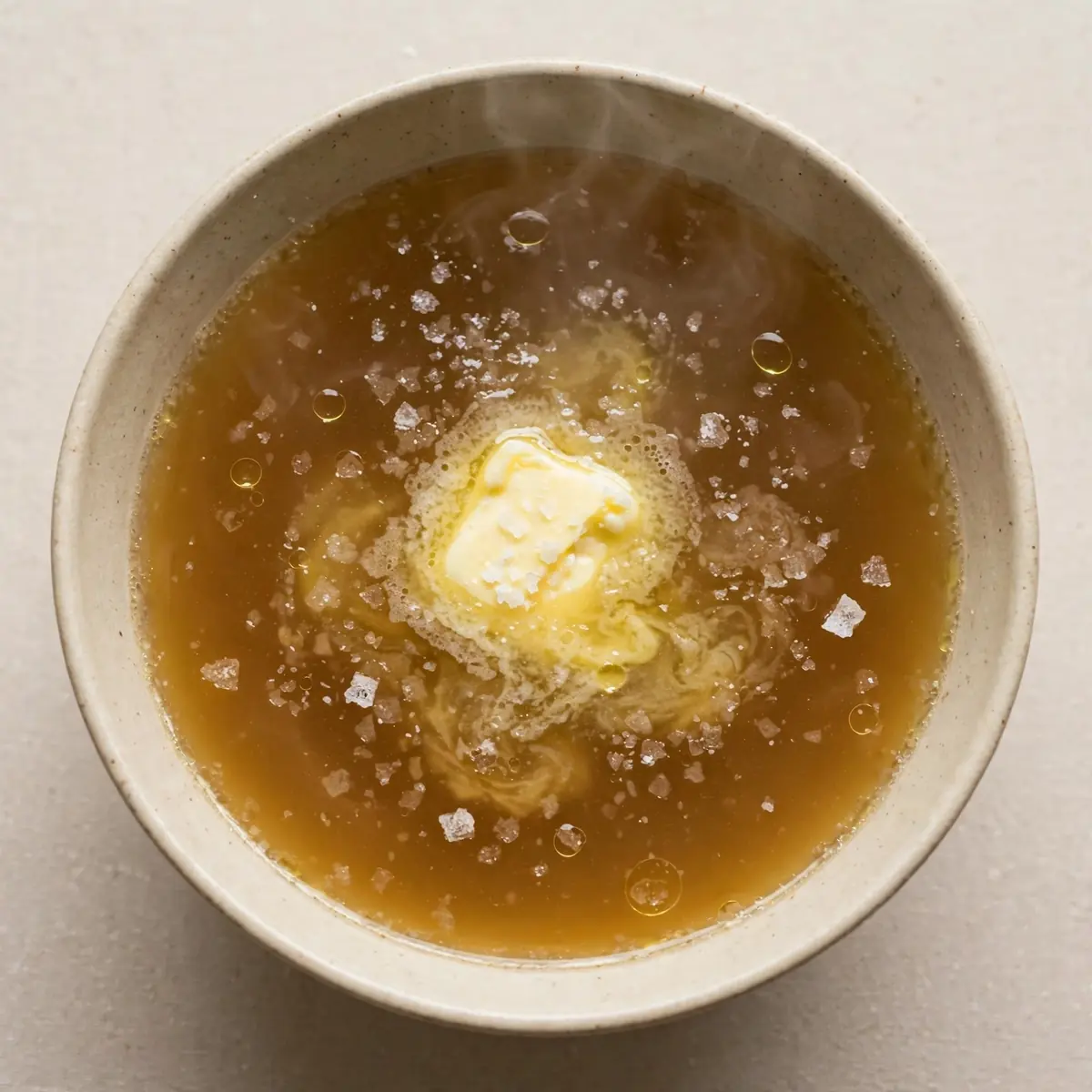
- Portion for meal prep: Divide the broth into individual mason jars or freezer-safe containers. When ready to serve, reheat a portion on the hob or in the microwave, then stir in 1–2 teaspoons of grass-fed butter per mug until it melts into a glossy, smooth finish. Taste and add a pinch more salt if needed.
Notes
The simmering time of 12-24 hours allows for optimal gelatin extraction, resulting in a wobbly, jelly-like consistency when cold. Don't discard the fat layer (tallow) that forms on top; it's excellent for cooking. Adjust salt to taste when serving.