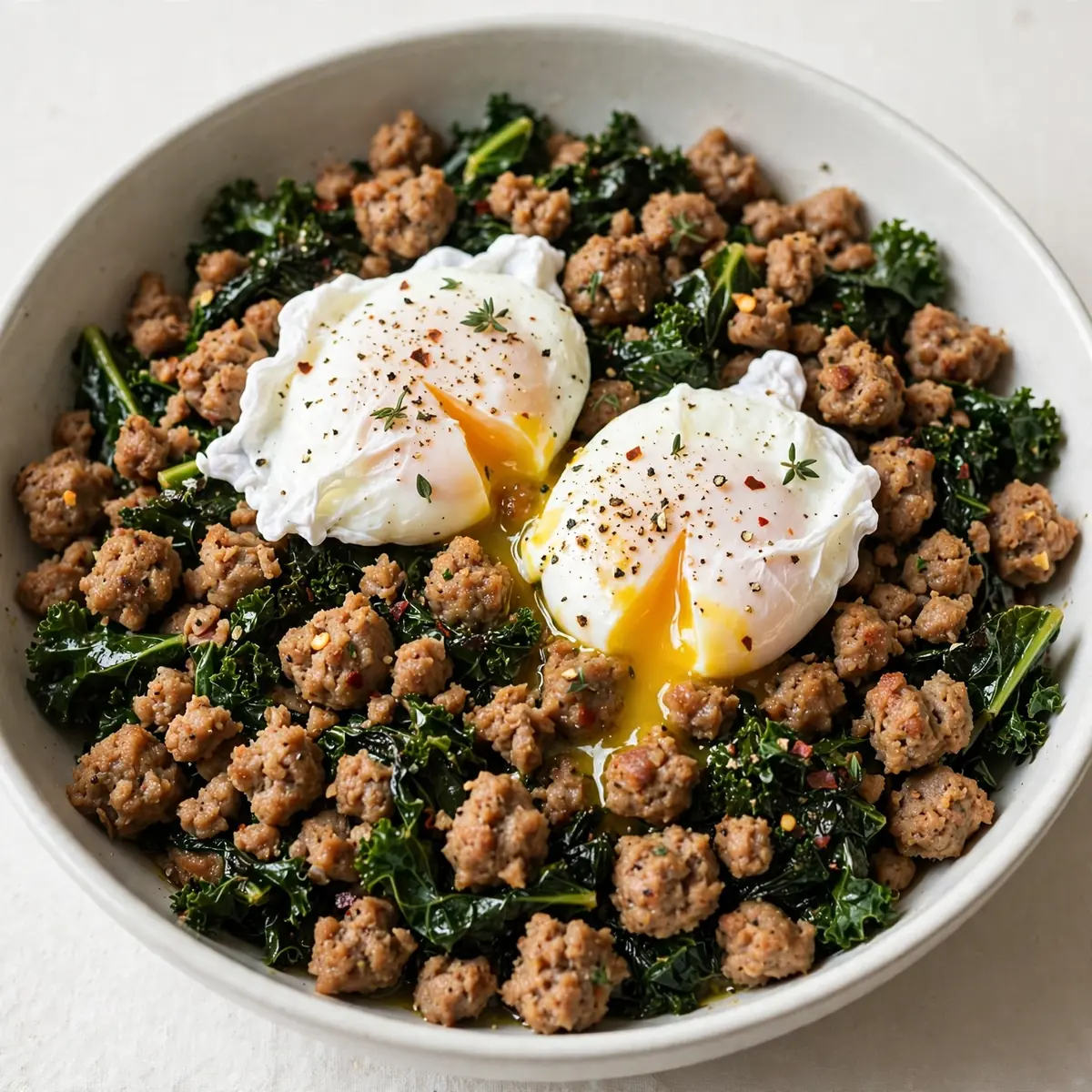
Ingredients
Method
- Cook the turkey sausage: Heat a large, heavy-based skillet (cast iron is ideal) over medium-high heat. Add the turkey sausage and break it apart with a wooden spoon as it begins to sizzle. You’ll hear a steady sputtering sound, and after about 5 minutes the meat will turn a pale golden-brown with crispy edges. The smell will be savoury and slightly peppery. Once no pink remains, use a slotted spoon to transfer the sausage to a bowl.
- Sweat the aromatics: Reduce the heat to medium and add the olive oil to the same pan. Tumble in the diced onion and red bell pepper. Stir occasionally, and you’ll notice the onion turning translucent after 4 minutes — the edges will look glossy and the raw bite will soften. Add the minced garlic and cook for 30 seconds until it becomes fragrant but not burnt; the aroma should shift from sharp to sweet.
- Wilt the kale in stages: Add half the chopped kale to the pan. It will look overwhelming at first, but don’t panic. Toss it with tongs, and within 2 minutes you’ll see the leaves turn a deep, vibrant green and reduce dramatically in volume. Add the remaining kale and repeat. The sound will change from a rustling crunch to a soft, steamy hiss. Sprinkle in a pinch of salt to help it soften further.
- Combine and season: Return the cooked sausage to the pan. Sprinkle over the smoked paprika, dried thyme, and black pepper. Stir everything together for 1 minute until the spices are evenly distributed and the kale is fully coated. The pan should smell warm and earthy — that’s your cue that the base is ready.
- Prepare the egg mixture: In a small bowl, whisk the eggs with the milk and a pinch of salt until the mixture is uniformly pale yellow and slightly frothy on top. The whisking should feel light and airy, with no streaks of white remaining.
- Cook the eggs gently: Create four shallow wells in the skillet mixture using the back of a spoon. Pour the egg mixture evenly into the wells — it should pool slightly but not overflow. Reduce the heat to low, cover the skillet with a lid or baking sheet, and let it cook for 6 to 8 minutes. You’ll know the eggs are done when the edges are set and the centre jiggles only slightly when you gently shake the pan. The top should look glossy but not wet.
- Finish with cheese and rest: Sprinkle the grated cheese over the top, replace the lid, and turn off the heat. Let the skillet rest for 2 minutes — the residual heat will melt the cheese into a golden, bubbly layer. When you lift the lid, you should see the cheese softly draped over the eggs and greens.
Notes
For best results, use a cast-iron skillet. The optional cheese adds richness; omit for a dairy-free version. Leftovers can be refrigerated for up to 2 days.